Palmer Luckey on AI, War, and Anduril
Axios · 28 min · The Axios Show, full interview
Open in YouTubeThe core argument
The biggest opportunities are the ones everyone else has written off — and the people who write them off are often the people who have never tried. Luckey's method is to identify a 'crazy' mission, fund it from his own conviction, and let product performance, not permission, do the arguing.
Luckey on why he left VR for defense and how he runs a hard-tech company on conviction: contrarian bets, long development cycles, and an absolute refusal to let consensus set his priorities.
Annotated timestamps
3–5 min core argumentsSkip the full lecture — jump straight to the passages that matter. Each clip links to YouTube at the exact moment.
- 01Why defense, after VR▶ 02:10
Luckey explains Anduril's thesis: defense was a market where software had barely arrived, so the competitive set was decades behind — an open door for non-consensus builders.
- 02Funding conviction with your own money▶ 11:30
He describes self-funding and moving fast when no institutional investor would touch the thesis. Ownership of the bet is what lets you hold it long enough to win.
- 03Hardware as software's next home▶ 21:00
The argument that the next leap in computing value is physical — drones, factories, ships — where software-defined products can out-iterate slow incumbent manufacturers.
Founder cross-references
opposing & complementary takesLuckey is Thiel's philosophy in hardware: monopoly niches, contrarian conviction, and infrastructure-level ambitions. The Oculus-to-Anduril arc is a live Zero to One case study.
Chouinard proves you can build category-defining physical products with the opposite temperament — patience, sustainability, and anti-scale — a useful counterpoint to Luckey's urgency.
Ideas in this lecture
Companion reads
All books →Zero to One
Peter Thiel with Blake Masters
Zero to One
★★★★½Peter Thiel with Blake Masters · 2014
How to build the future by creating new things rather than copying what works.
The Innovator's Dilemma
Clayton M. Christensen
The Innovator's Dilemma
★★★★★Clayton M. Christensen · 1997
When new technologies cause great firms to fail — and why good management is the culprit.
The Almanack of Naval Ravikant
Eric Jorgenson
The Almanack of Naval Ravikant
★★★★½Eric Jorgenson · 2020
A guide to wealth and happiness from the most-quoted philosopher of the startup world.
Keep exploring
 40 min
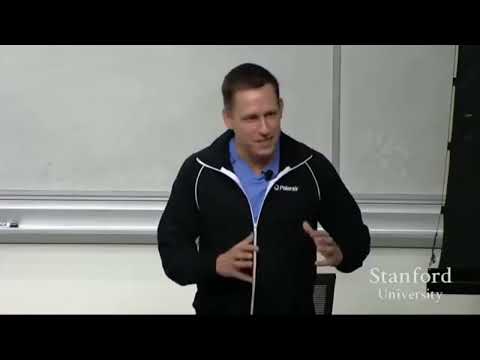
Competition is for Losers
Thiel's opening salvo: competition destroys value, monopoly captures it. He shows that every successful company hides a monopoly from the world while pretending to compete — and that your goal is to be the only company that can do what you do.
 56 min
Patrick Collison: Hiring at Stripe and the Role of a Product-Focused CEO
Collison on building Stripe as an infrastructure company: obsessive product quality, hiring as the company's real strategy, and why boring, reliable infrastructure beats flashy consumer features as a business model.
 1h 9m
Sam Altman in conversation with Patrick Collison
A wide-ranging conversation between two of the defining infrastructure builders of their generation: what 'the hardest problems' means, the value of very long time horizons, and how to keep a company ambitious without losing focus.