Eli Goldratt on the Theory of Constraints
TOCICO · 20 min · TOCICO interview
Open in YouTubeThe core argument
Improving everything at once improves nothing — the system's output is capped by its one constraint, the bottleneck. Goldratt's five focusing steps: identify the constraint, exploit it, subordinate everything to it, elevate it, then repeat. Most 'improvement' is effort spent on non-bottlenecks, which adds capacity the system can't use.
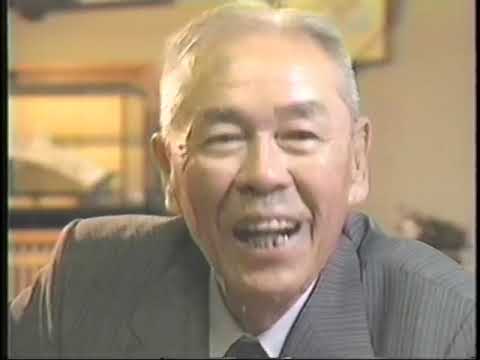
Goldratt on the one idea that changed management: every system is limited by a single constraint, and you improve the whole by focusing on the bottleneck — not everywhere at once.
Annotated timestamps
3–5 min core argumentsSkip the full lecture — jump straight to the passages that matter. Each clip links to YouTube at the exact moment.
- 01The chain and its weakest link▶ 03:30
Goldratt's framing: a chain's strength is its weakest link. Improving any other link doesn't make the chain stronger.
- 02The five focusing steps▶ 10:20
Identify the constraint, exploit it, subordinate everything to it, elevate it, and repeat — the discipline of bottleneck-focused improvement.
- 03An hour at the bottleneck is an hour for the whole system▶ 16:10
Why time lost at the constraint is the only time that truly matters — and why every other improvement is subordinated to protecting it.
Founder cross-references
opposing & complementary takesOhno cuts waste everywhere; Goldratt focuses only where it matters. Lean and TOC are two lenses on the same machine.
Drucker said concentrate on the few things that matter; Goldratt gives the exact method — find the constraint and protect it.
Ideas in this lecture
Companion reads
All books →Out of the Crisis
W. Edwards Deming
Out of the Crisis
★★★★½W. Edwards Deming · 1982
The 14 Points and the system that made quality a management discipline.
Toyota Production System
Taiichi Ohno
Toyota Production System
★★★★½Taiichi Ohno · 1978
Beyond large-scale production — the just-in-time system and the elimination of waste.
Zero Quality Control: Source Inspection and the Poka-Yoke System
Shigeo Shingo
Zero Quality Control: Source Inspection and the Poka-Yoke System
★★★★Shigeo Shingo · 1986
The radical standard: make defects impossible, not improbable.
Keep exploring
 45 min
W. Edwards Deming — Rare Full-Length Interview (1984)
Deming in his own voice on the 14 Points, statistical process control, and why quality is a management problem, not a worker problem.
 20 min
Taiichi Ohno Discusses the Toyota Production System
Ohno on the Toyota Production System: just-in-time, the seven wastes, and why inventory hides the problems you need to see.
 15 min
Zero Quality Control: Poka-Yoke in JIT
Shingo's radical standard: defects should be impossible, not improbable — poka-yoke mistake-proofing at the source, so quality control is zero because the error can't happen.