Never Split the Difference (Talks at Google)
Talks at Google · 55 min · Talks at Google
Open in YouTubeThe core argument
Negotiation is not a battle of wills — it's a rapport engine. Voss's tools — mirroring, labeling emotions, calibrated questions, and treating 'no' as the opening — work by making the other side feel understood, which is what actually moves them. In business, every pricing, collection, and hiring conversation is a negotiation, and the tools are learnable.
The FBI negotiator on tactical empathy: how to make the other side feel heard, reframe 'no' as the start, and win deals, prices, and disputes without splitting.
Annotated timestamps
3–5 min core argumentsSkip the full lecture — jump straight to the passages that matter. Each clip links to YouTube at the exact moment.
- 01Tactical empathy▶ 05:20
The core skill: understanding the other side's world enough to make them feel seen. Empathy as a tactical, not soft, tool.
- 02No is the start▶ 18:40
Reframe: people are safe to say no; 'no' opens the conversation. Getting to 'yes' fast is often a lie.
- 03Calibrated questions▶ 34:00
'How am I supposed to do that?' — questions that start with how/what make the other side solve the problem. They give them the feeling of control.
Founder cross-references
opposing & complementary takesVoss and Godin both understand that people decide emotionally then justify rationally — empathy and story are the on-ramps.
Michalowicz fixes the internal cash-flow side; Voss fixes the external conversation side. Together they're the collections toolkit.
Ideas in this lecture
Companion reads
All books →The Lean Startup
Eric Ries
The Lean Startup
★★★★Eric Ries · 2011
Build-measure-learn and the science of getting a product to market cheaply.
Blitzscaling
Reid Hoffman & Chris Yeh
Blitzscaling
★★★★Reid Hoffman & Chris Yeh · 2018
The lightning-fast path to massive scale — and when to deliberately take it.
This Is Marketing
Seth Godin
This Is Marketing
★★★★½Seth Godin · 2018
The definitive modern statement of marketing as making change — for the smallest viable audience.
Keep exploring
 6 min
Do Things That Don't Scale
The canonical argument that early growth is manual: recruit users by hand, make every interaction feel like a personal favor, and only build scalable mechanics after the core experience is proven on a few users.
 26 min
It's Time to Build
Andreessen's argument that the world's shortage is not ideas or capital but building: institutions talk, incumbents stall, and the advantage goes to whoever converts energy into shipped reality fastest.
 1h 1m
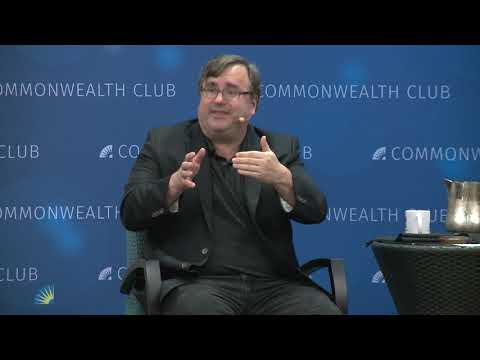
Reid Hoffman: The Secrets of Blitzscaling
Hoffman's thesis that when speed is the only way to win, you deliberately trade efficiency and even product polish for market leadership — and why the rules of normal management don't apply at that speed.