The Psychology of Human Misjudgment
BuffettMungerWisdom · 1h 20m · Harvard speech (1995), revised version
Open in YouTubeThe core argument
Wisdom is not IQ; it is the ability to notice and neutralize systematic misjudgment in yourself and others. Because incentives drive behavior, the way to change outcomes is to change the incentive structure — 'Never, ever, think about something else when you should be thinking about the power of incentives.'
Munger's magnum opus on the 25+ psychological tendencies that cause smart people to make bad decisions — reward-punishment bias, social proof, incentive-caused bias, and the rest — framed as an engineering problem: design the system so the bias doesn't matter.
Annotated timestamps
3–5 min core argumentsSkip the full lecture — jump straight to the passages that matter. Each clip links to YouTube at the exact moment.
- 01Incentives are the prime mover▶ 03:15
Munger opens with the Federal Express night-shift story: you change behavior by changing the pay scheme, not by asking nicer. 'I've been in the top 5% of my age cohort all my life. The ability to destroy your ideas is rare.'
- 02Reward and punishment superresponse▶ 18:40
The human tendency to overreact to incentives — including perverse incentives that reward bad behavior. Sales commissions, billing structures, and quotas all quietly program your company.
- 03Social proof and envy▶ 42:00
We copy the tribe even when the tribe is wrong. Munger: if you can't see a competent decision, following the crowd is how most industries stay mediocre for decades.
- 04Designing against your own biases▶ 01:06:00
The conclusion: checklists, inversion, and 'psychological denial' awareness. Actively design processes that make the standard errors hard to commit.
Founder cross-references
opposing & complementary takesMunger's social-proof bias is the psychological mechanism behind Thiel's 'everyone believes it is probably wrong'. Both distrust consensus — one economically, one psychologically.
Huang embraces paranoia and speed as a defense mechanism; Munger would call that a bias-prone strategy unless backed by structural checklists. Two different answers to the same 'smart people, bad decisions' problem.
Ideas in this lecture
Companion reads
All books →Poor Charlie's Almanack
Charles T. Munger
Poor Charlie's Almanack
★★★★★Charles T. Munger · 2005
The wit and wisdom of the man who taught Warren Buffett to think in mental models.
The Effective Executive
Peter F. Drucker
The Effective Executive
★★★★½Peter F. Drucker · 1967
The definitive guide to the executive's real job: being effective, not busy.
Competitive Strategy
Michael E. Porter
Competitive Strategy
★★★★Michael E. Porter · 1980
The Five Forces and the foundational framework of business strategy.
Keep exploring
 30 min
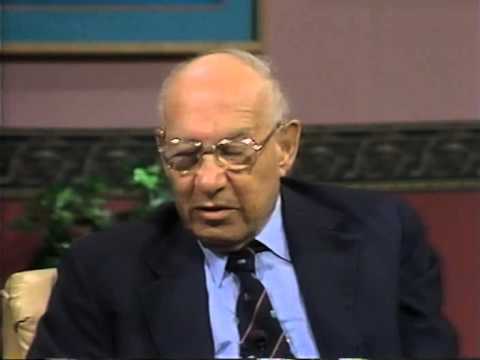
Peter Drucker: The Iconic Interview
One of the last extended conversations with the father of modern management, on what a business is for, the discipline of the effective executive, and why 'management is doing things right; leadership is doing the right things.'
 40 min
Keynote on Strategy
Porter's doctrine in one session: strategy is not being better at the same game — it is choosing to play a different game, defined by trade-offs, a unique value proposition, and the deliberate refusal of competing in the same way.
 1h 12m
Thinking, Fast and Slow
The Nobel laureate walks through the two systems of thought — the fast, intuitive System 1 and the slow, deliberate System 2 — and the systematic biases that run your decisions behind your back.