The Science of Persuasion (Robert Cialdini)
BigSpeak Speakers Bureau · 6 min · Influence at Work / BigSpeak
Open in YouTubeThe core argument
People say yes for six systematic reasons: reciprocity, commitment/consistency, social proof, authority, liking, and scarcity. They work because they're shortcuts the brain uses under uncertainty — which means they can be used to build a business or to exploit customers. The ethical use is to make your offer genuinely easier to say yes to.
Cialdini's six principles of influence in one compact video — the psychology under every sale, sign-up, and recommendation.
Annotated timestamps
3–5 min core argumentsSkip the full lecture — jump straight to the passages that matter. Each clip links to YouTube at the exact moment.
- 01The six weapons▶ 00:40
Reciprocity, commitment, social proof, authority, liking, scarcity — the six automatic principles behind most decisions.
- 02Social proof in action▶ 02:50
People look to others to decide. 'Most popular' and 'join your neighbors' beat 'best value' — because what others do is the strongest signal.
- 03Scarcity and commitment▶ 04:40
What's rare feels more valuable, and people stay consistent with what they've already committed to. Use them to make the yes easier, not to manipulate.
Founder cross-references
opposing & complementary takesCialdini supplies the science behind Gladwell's mavens and stickiness — the mechanisms by which ideas spread.
Godin's tribes and stories are Cialdini's principles applied to brand; Cialdini is the why, Godin the how.
Ideas in this lecture
Companion reads
All books →The Lean Startup
Eric Ries
The Lean Startup
★★★★Eric Ries · 2011
Build-measure-learn and the science of getting a product to market cheaply.
Blitzscaling
Reid Hoffman & Chris Yeh
Blitzscaling
★★★★Reid Hoffman & Chris Yeh · 2018
The lightning-fast path to massive scale — and when to deliberately take it.
This Is Marketing
Seth Godin
This Is Marketing
★★★★½Seth Godin · 2018
The definitive modern statement of marketing as making change — for the smallest viable audience.
Keep exploring
 6 min
Do Things That Don't Scale
The canonical argument that early growth is manual: recruit users by hand, make every interaction feel like a personal favor, and only build scalable mechanics after the core experience is proven on a few users.
 26 min
It's Time to Build
Andreessen's argument that the world's shortage is not ideas or capital but building: institutions talk, incumbents stall, and the advantage goes to whoever converts energy into shipped reality fastest.
 1h 1m
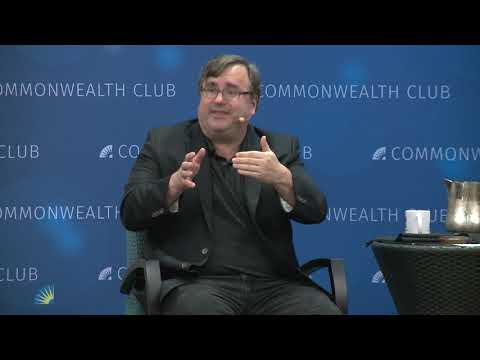
Reid Hoffman: The Secrets of Blitzscaling
Hoffman's thesis that when speed is the only way to win, you deliberately trade efficiency and even product polish for market leadership — and why the rules of normal management don't apply at that speed.