Richard Branson: Dyslexia Actually Helped Me
Graham Bensinger · 8 min · In Depth with Graham Bensinger
Open in YouTubeThe core argument
Constraints are brand inputs. Branson's dyslexia forced delegation (he couldn't do everything himself, so he built teams) and simplicity (clear, human communication). The lesson: the thing you think is your weakness is often the shape of your advantage — if you work with it instead of against it.
Branson on turning a disadvantage into a brand: how dyslexia forced him to simplify, delegate, and think visually — the skills that built a 400-company brand.
Annotated timestamps
3–5 min core argumentsSkip the full lecture — jump straight to the passages that matter. Each clip links to YouTube at the exact moment.
- 01Delegation by necessity▶ 00:40
Branson couldn't read the way others did, so he learned to hire people who could — building teams earlier than most founders ever do.
- 02Simplicity as a weapon▶ 03:20
The Virgin brand communicates simply because Branson had to. Clarity forced by constraint became the brand's signature.
- 03The constraint is the advantage▶ 06:10
Reframing dyslexia as the reason Virgin is what it is — the lesson for any founder with an 'unfair' constraint.
Founder cross-references
opposing & complementary takesBranson's brand simplicity is Godin's 'people buy stories' in practice — the story is simple, human, and worth telling.
Both build brands on a deliberate simplicity — Branson through necessity, Ive through craft. Same principle, different sources.
Ideas in this lecture
Companion reads
All books →The Lean Startup
Eric Ries
The Lean Startup
★★★★Eric Ries · 2011
Build-measure-learn and the science of getting a product to market cheaply.
Blitzscaling
Reid Hoffman & Chris Yeh
Blitzscaling
★★★★Reid Hoffman & Chris Yeh · 2018
The lightning-fast path to massive scale — and when to deliberately take it.
This Is Marketing
Seth Godin
This Is Marketing
★★★★½Seth Godin · 2018
The definitive modern statement of marketing as making change — for the smallest viable audience.
Keep exploring
 6 min
Do Things That Don't Scale
The canonical argument that early growth is manual: recruit users by hand, make every interaction feel like a personal favor, and only build scalable mechanics after the core experience is proven on a few users.
 26 min
It's Time to Build
Andreessen's argument that the world's shortage is not ideas or capital but building: institutions talk, incumbents stall, and the advantage goes to whoever converts energy into shipped reality fastest.
 1h 1m
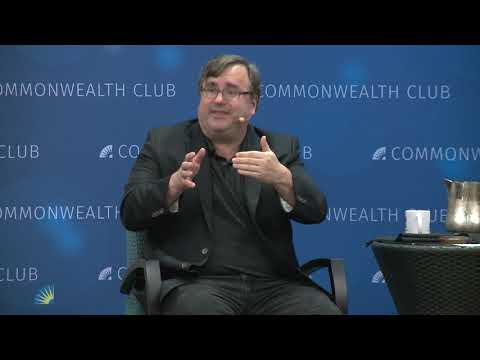
Reid Hoffman: The Secrets of Blitzscaling
Hoffman's thesis that when speed is the only way to win, you deliberately trade efficiency and even product polish for market leadership — and why the rules of normal management don't apply at that speed.